
Biden defends decision to end Afghan military operation
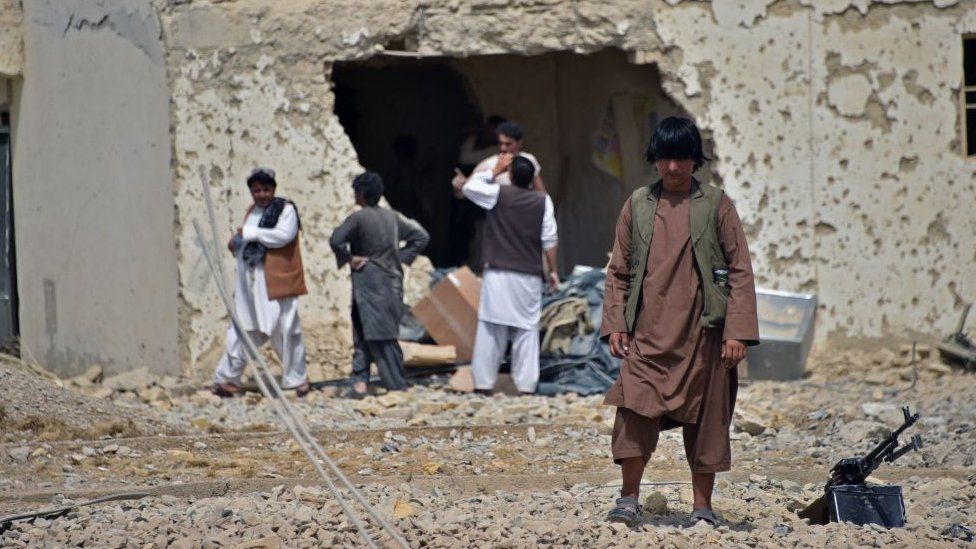
The fourth US president to oversee the war also defended the speed of the US withdrawal, saying it saved lives.
Mr Biden's speech comes as the Taliban militant group continues to seize territory around the country.
US forces have fought in Afghanistan for nearly 20 years, following the terror attacks of 11 September 2001.
Earlier this year, Mr Biden set a 11 September 2021 goal of withdrawing all US troops.
Donald Trump had agreed with the Taliban to pull out US troops by May 2021, but that deadline was pushed back by Mr Biden after he took office in January.
media captionBiden: 'We did not go to Afghanistan to nation build'
"Just one more year of fighting in Afghanistan is not a solution," Mr Biden said in a White House speech, "but a recipe for fighting there indefinitely."
He also denied that a Taliban takeover is "inevitable," saying that the Taliban force of approximately 75,000 fighters is no match for the 300,000 Afghan security forces.
Even after the total pull out is complete, the US is expected to keep 650 to 1,000 troops in Afghanistan to guard the US embassy, Kabul airport, and other key government installations.
Recent polls have shown broad US support for leaving Afghanistan, with Republican voters more sceptical of the decision to withdraw.
Mr Biden also said that efforts are being made to get translators, interpreters and other Afghans that worked with the US government out of the country. He said 2,500 special immigrant visas have been been issued to allow them to come to the United States, but only half have come so far.
Last month, Mr Biden assured Afghan leaders at a White House meeting that US aid will continue.
The vast majority of remaining foreign forces in Afghanistan have left ahead of the US 11 September deadline, leaving the Afghan military completely in charge of national security.
President Ashraf Ghani insists that Afghan security forces are fully capable of keeping insurgents at bay, but there have been reports of thousands of Afghan troops seeking refuge in other countries to avoid the fighting.
Earlier in the week, Taliban spokesman Suhail Shaheen told the BBC that the group was not responsible for the recent increase in violence. He insisted that many districts had fallen to the Taliban through mediation after Afghan soldiers refused to fight.
US-led forces ousted the Taliban from power in Afghanistan in 2001. The group had been harbouring Osama Bin Laden and other al-Qaeda figures linked to the 9/11 attacks in the US that triggered the invasion. However, it has gradually been regaining territory in recent years.
Twenty years of conflict in Afghanistan – what happened when?
From 9/11, to intense fighting on the ground, and now full withdrawal of US-led forces, here’s what happened.
9/11
11 September 2001
Al-Qaeda, led by Osama Bin Laden in Afghanistan, carries out the largest terror attack ever conducted on US soil.
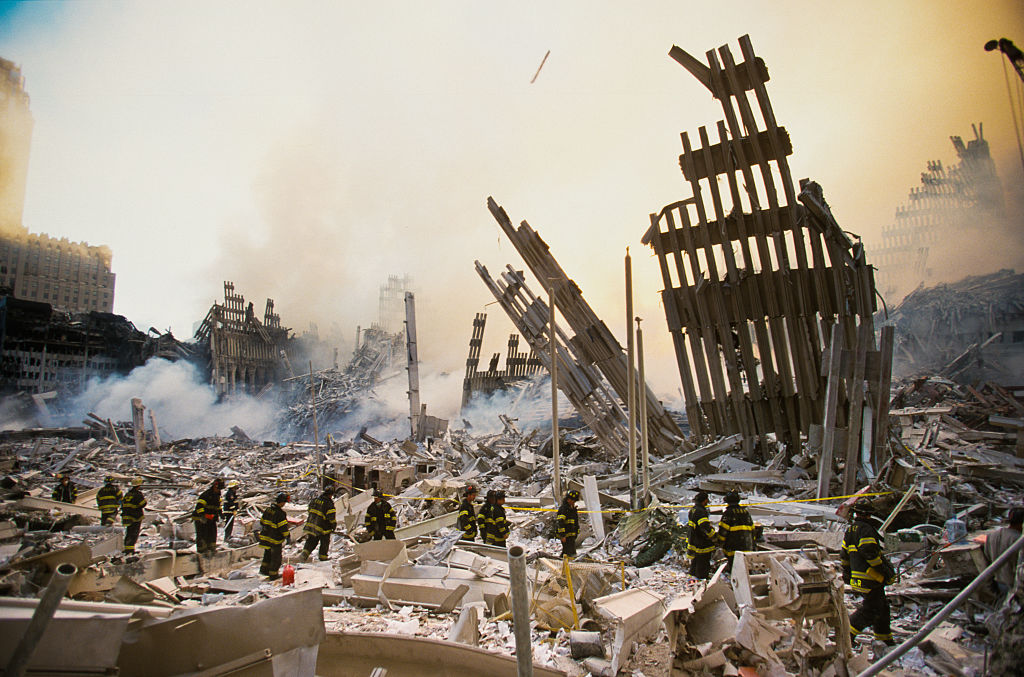
Image captionThe World Trade Centre is reduced to rubbleIMAGE COPYRIGHT BYGETTY
Four commercial airliners are hijacked. Two are flown into the World Trade Centre in New York, which collapses. One hits the Pentagon building in Washington, and one crashes into a field in Pennsylvania. Nearly 3,000 people are killed.
First air strikes
7 October 2001
A US-led coalition bombs Taliban and al-Qaeda facilities in Afghanistan. Targets include Kabul, Kandahar and Jalalabad.
The Taliban, who took power after a decade-long Soviet occupation was followed by civil war, refuse to hand over Bin Laden. Their air defences and small fleet of fighter aircraft are destroyed.
Fall of Kabul
13 November 2001
The Northern Alliance, a group of anti-Taliban rebels backed by coalition forces, enters Kabul as the Taliban flee the city.

Image captionCoalition-backed Northern Alliance fighters ride tanks into Kabul as the Taliban retreatIMAGE COPYRIGHT BYGETTY
By the 13 November 2001, all Taliban have either fled or been neutralised. Other cities quickly fall.
New constitution
26 January 2004
After protracted negotiations at a “loya jirga” or grand assembly, the new Afghan constitution is signed into law. The constitution paves the way for presidential elections in October 2004.
Hamid Karzai becomes president
7 December 2004
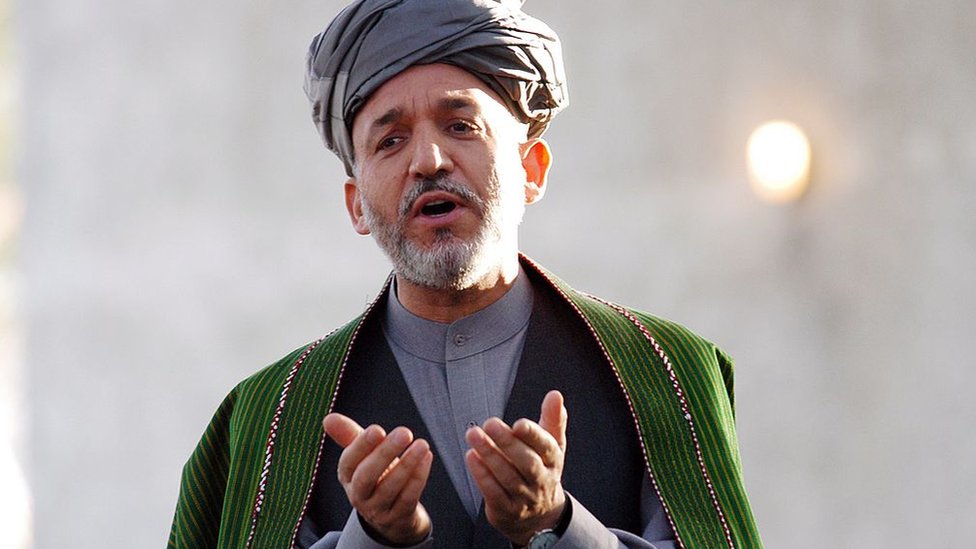
Image captionHamid Karzai led anti-Taliban groups around Kandahar before becoming presidentIMAGE COPYRIGHT BYGETTY
Hamid Karzai, the leader of the Popalzai Durrani tribe, becomes the first president under the new constitution. He serves two five-year terms as president.
UK troops deployed to Helmand
May 2006
British troops arrive in Helmand province, a Taliban stronghold in the south of the country.
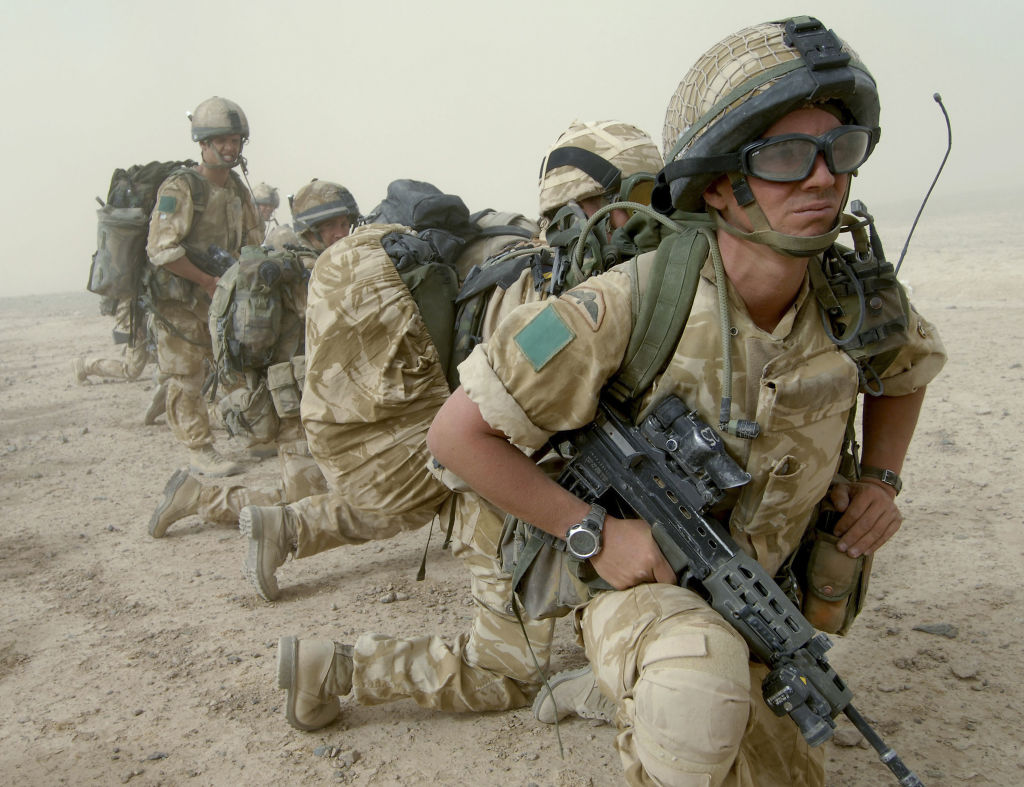
Image captionSoldiers of the Parachute Regiment lead the first UK deployment to HelmandIMAGE COPYRIGHT BYGETTY
Their initial mission is to support reconstruction projects, but they are quickly drawn into combat operations. More than 450 British troops lose their lives in Afghanistan over the course of the conflict.
Obama’s surge
17 February 2009
US President Barack Obama approves a major increase in the number of troops sent to Afghanistan. At their peak, they number about 140,000.
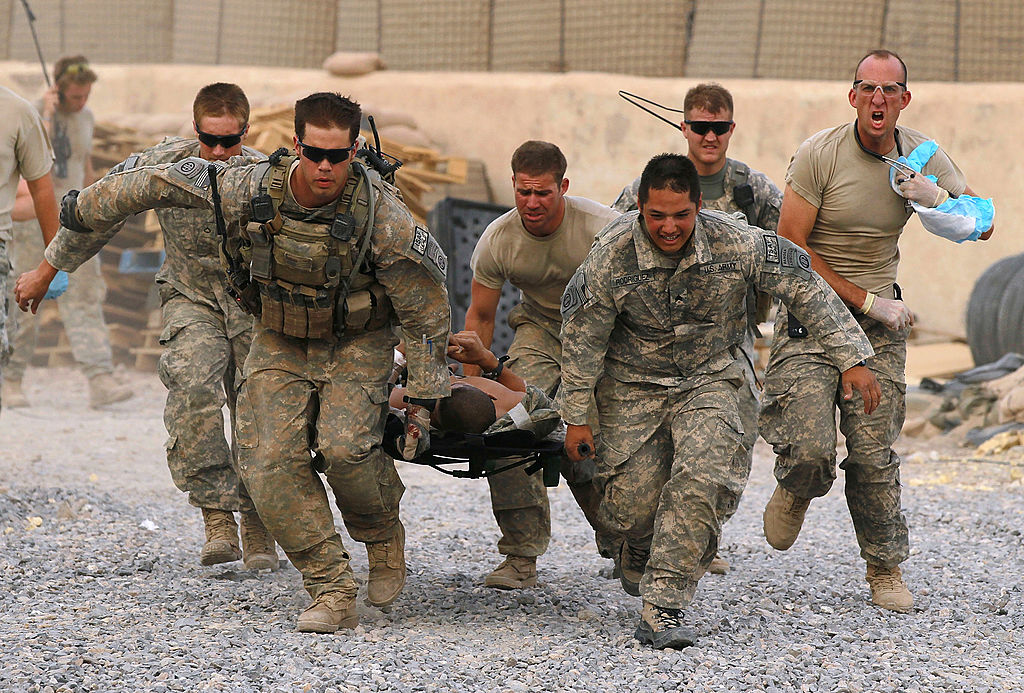
Image captionUS troops in intense combat operations in the south of the countryIMAGE COPYRIGHT BYGETTY
The so-called “surge” is modelled on US strategy in Iraq where US forces focussed on protecting the civilian population as well as killing insurgent fighters.
Osama Bin Laden killed
2 May 2011
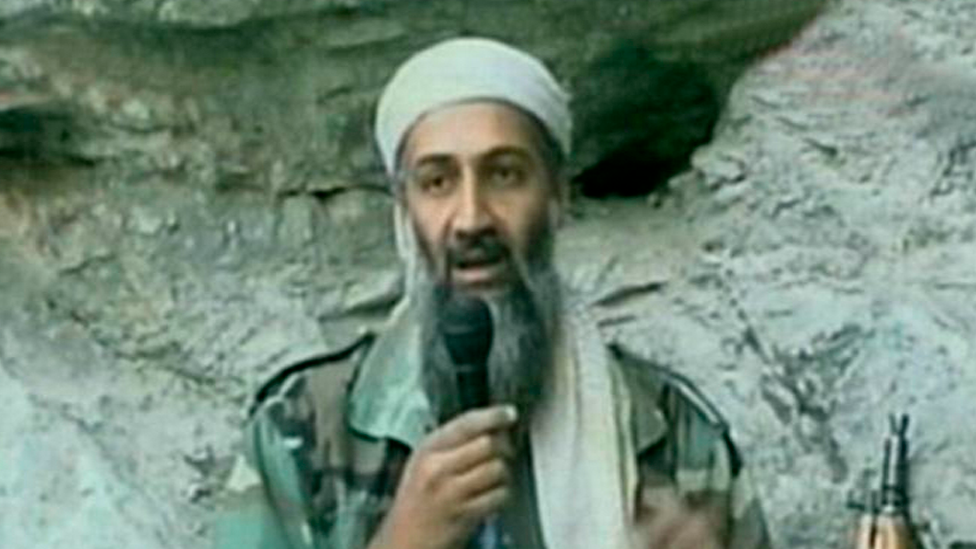
Image captionBin Laden is traced to a compound located less than a mile from a Pakistani military academyIMAGE COPYRIGHT BYGETTY
The leader of al-Qaeda is killed in an assault by US Navy Seals on a compound in Abbottabad in Pakistan. Bin Laden’s body is removed and buried at sea. The operation ends a 10-year hunt led by the CIA. The confirmation that Bin Laden had been living on Pakistani soil fuels accusations in the US that Pakistan is an unreliable ally in the war on terror.
Death of Mullah Omar
23 April 2013
The founder of the Taliban, Mullah Mohammed Omar, dies. His death is kept secret for more than two years.
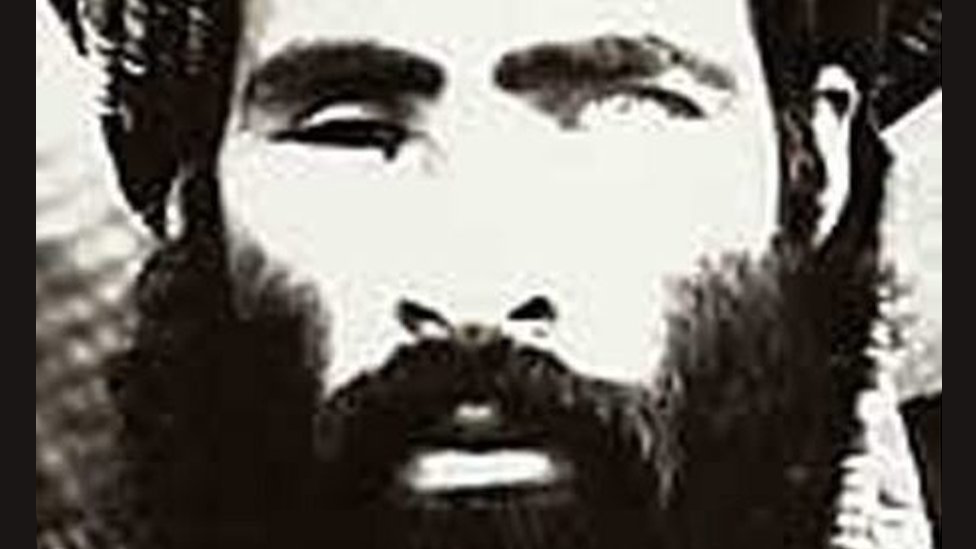
Image captionThe Taliban leader is believed to have suffered a shrapnel wound to his right eye in the 1980sIMAGE COPYRIGHT BYEPA
According to Afghan intelligence, Mullah Omar dies of health problems at a hospital in the Pakistani city of Karachi. Pakistan denies that he was in the country.
Nato ends combat operations
28 December 2014
At a ceremony in Kabul, Nato ends its combat operations in Afghanistan. With the surge now over, the US withdraws thousands of troops. Most of those who remain focus on training and supporting the Afghan security forces.
Taliban resurgence
2015
The Taliban launch a series of suicide attacks, car bombings and other assaults. The parliament building in Kabul, and the city of Kunduz are attacked. Islamic State militants begin operations in Afghanistan.
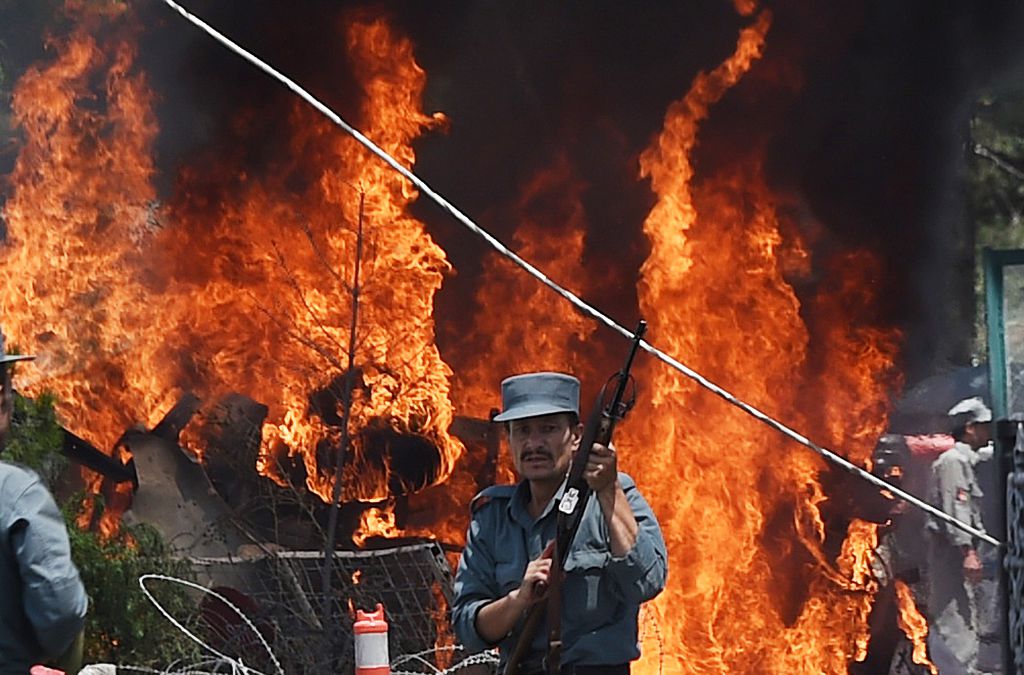
Image captionKabul's international airport is struck on 10 August 2015IMAGE COPYRIGHT BYGETTY
Death toll announcement
25 January 2019
Afghan President Ashraf Ghani says more than 45,000 members of his country’s security forces have been killed since he became leader in 2014. The figure is far higher than previously thought.
US signs deal with Taliban
29 February 2020
The US and the Taliban sign an “agreement for bringing peace” to Afghanistan, in Doha, Qatar. The US and Nato allies agree to withdraw all troops within 14 months if the militants uphold the deal.
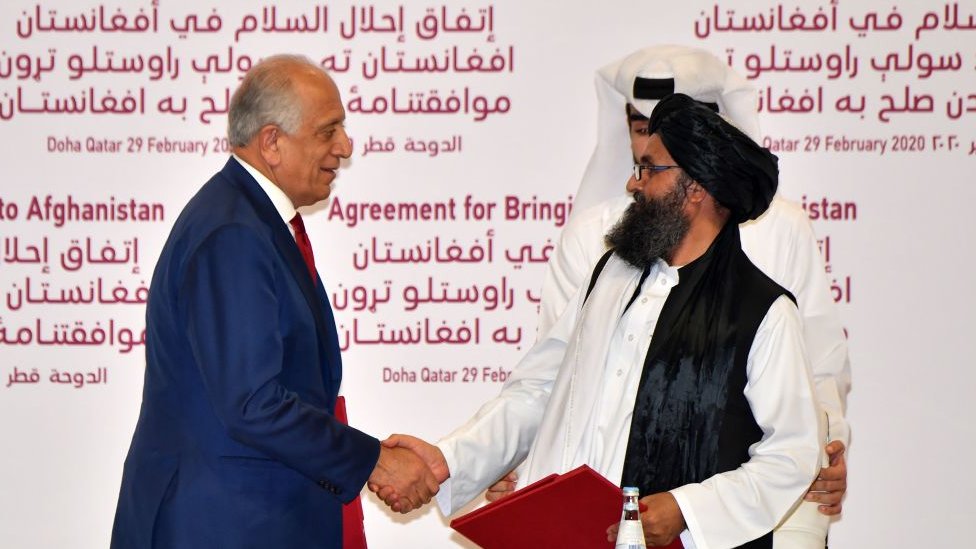
Image captionThe deal lays out a timetable for full withdrawalIMAGE COPYRIGHT BYGETTY
Date for final withdrawal
11 September 2021
US forces are scheduled to withdraw from Afghanistan by 11 September 2021, exactly 20 years since 9/11. There are strong indications that the withdrawal may be complete before the official deadline.
Show more