
UK foreign secretary calls for "flexible approach" from EU as post-Brexit tensions mar G7 summit
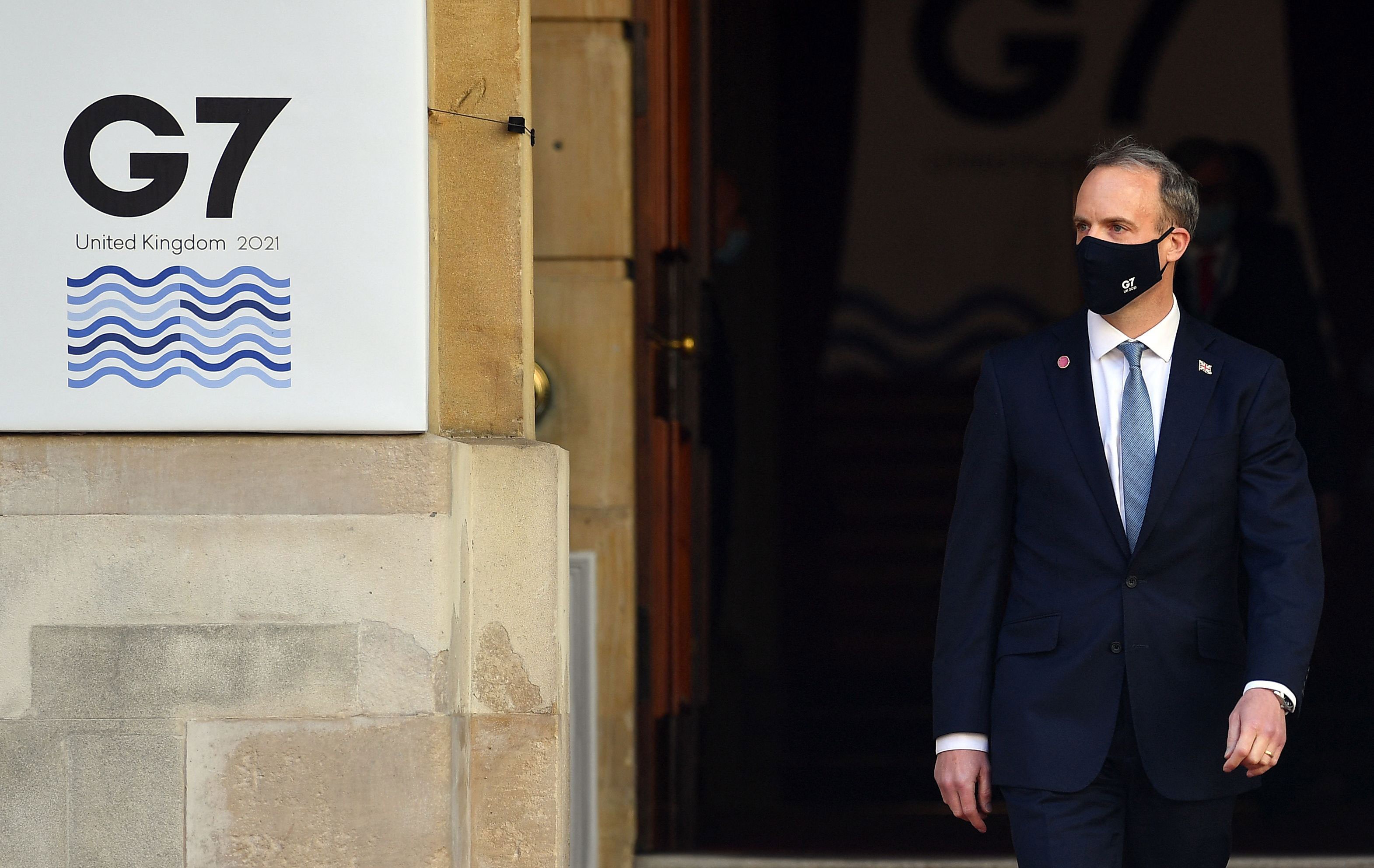
Fallout from the UK's departure from the European Union continues to overshadow Prime Minister Boris Johnson's efforts to reposition post-Brexit Britain on the global stage.
The G7 summit in England's Carbis Bay, Cornwall, comes at a time of tension over Northern Ireland's role in the UK's Brexit agreement with the European Union.
EU leaders have so far rebuffed British attempts to re-negotiate parts of the post-Brexit trade agreement relating to Northern Ireland. The Northern Ireland Protocol came into force on January 1 this year but has not yet been fully implemented.
Speaking to the BBC's "The Andrew Marr Show," Foreign Secretary Dominic Raab declined to confirm whether France's President Emmanuel Macron had referred to Northern Ireland as not being fully part of the United Kingdom in closed-door discussions Saturday.
"But what I can tell you is this," he said. "Various EU figures here in Carbis Bay, but frankly for months now and years, have characterized Northern Ireland as somehow a separate country. And that is wrong."
The UK is looking for a "flexible approach" to all of the provisions in the protocol, Raab said, adding that "the ball is in the EU's court."
"We are willing to be flexible and pragmatic but they must come back with the reciprocal goodwill to make that happen," he said.
EU Commission President Ursula von der Leyen insisted Saturday that the European Union stands behind the post-Brexit trade deal.
Following a meeting with Johnson and EU Council President Charles Michel in Carbis Bay, von der Leyen tweeted that the EU is in “complete unity” on the issue of the Northern Ireland Protocol.
"The Good Friday Agreement and peace on the island of Ireland are paramount. We negotiated a Protocol that preserves this, signed and ratified by the EU and the UK.”
She added that the EU wants the “best possible relations with the UK," but urged it to “implement what we agreed on."
In March, the European Union launched legal proceedings against the UK over London's unilateral attempts to extend the Brexit "grace period" on food imports to Northern Ireland.
Tensions in May over fishing rights also led to Britain and France both sending naval vessels to the Channel island of Jersey.